The truth is, I speak about mental and health and wellbeing so much, I sometimes forget it is a subject that many other people still talk very little about or even, not at all.
The reasons for that are not just down to the stigma and discrimination that we know exists, but also down to the fact that we are all really different! Even though we may appear very similar in some ways.
In western society, our general accepted understanding of mental ill-health is due to a chemical imbalance. Whilst in other countries, religions and cultures around the world, mental health issues are understood to manifest in different ways, recognised through physical sensations, for others through specific worries or concerns affecting emotions, or perhaps as spiritual entities, other cultures believe them to be evil or demonic, creating, even more, a taboo and stigma (Gorvett, 2020). Failure to consider the cultural norms of others might affect how we are able to support colleagues, children or families who are black or people of colour and can lead to a lack of trust and prevent appropriate help care and intervention.
Edward, T. Hall, (1976) Iceberg Concept of culture enables us to understand another person on a deeper level, by understanding and recognising the difference in behaviours, underlying beliefs, values, and thought patterns.
“What this model teaches us is that we cannot judge a new culture based only on what we see when we first enter it. We must take the time to get to know individuals from that culture and interact with them. Only by doing so can we uncover the values and beliefs that underlie the behaviour of that society.”

“Health is not just the physical wellbeing of an individual but also the social, emotional and cultural wellbeing of the whole community, in which each individual can achieve their full potential as a human being, thereby bringing about the total wellbeing of their community.” Aboriginal Health and Medical Research Council of New South Wales, Australia.
Wellbeing is more than self-care and a one size fits all model, for each of us, being well will mean something different.
That will be down to our unique window of the world. If we consider things that shape our values and beliefs it will be down to our family traditions and customs, ethnicity, culture, religion and spirituality, which will all play a part. So will gender identity, sexuality, disability, neurodiversity. Our work, interests, hobbies, sport, recreation, nutrition, social networks, community links all contribute to our sense of self and our sense of being well.
Whilst writing the manuscript for my book on early years educator wellbeing earlier this year, I delved into a deeper culture and understanding of wellbeing. I realised wellbeing is truly about inclusion and belonging. I also realised for the last five years I have been making assumptions about wellness that is my lived experience as a white woman. I realise in many aspects, I should have been looking through a lens that was not just my own. I even had the cheek to call my training company Wellness For All. I think about that a lot. In my mind, it stood for everyone: adults, children and EY. Now I can say, it includes and seeks to understand intersections of wellness for us all.
I attended the Penguin and Tiney launch of Laura Henry Allain MBE, new book, My Skin, Your Skin during #EYWellbeing Week. It was chaired by Liz Pemberton, on the panel were children’s author Trish Cook and illustrator Onyinye Iwu and Matt Lloyd-Rose. I will not repeat the lived experiences shared but it was a heartfelt and emotive space, filled with joy. Without realising it, this book and its launch link to the theme of #ThisIsMe.
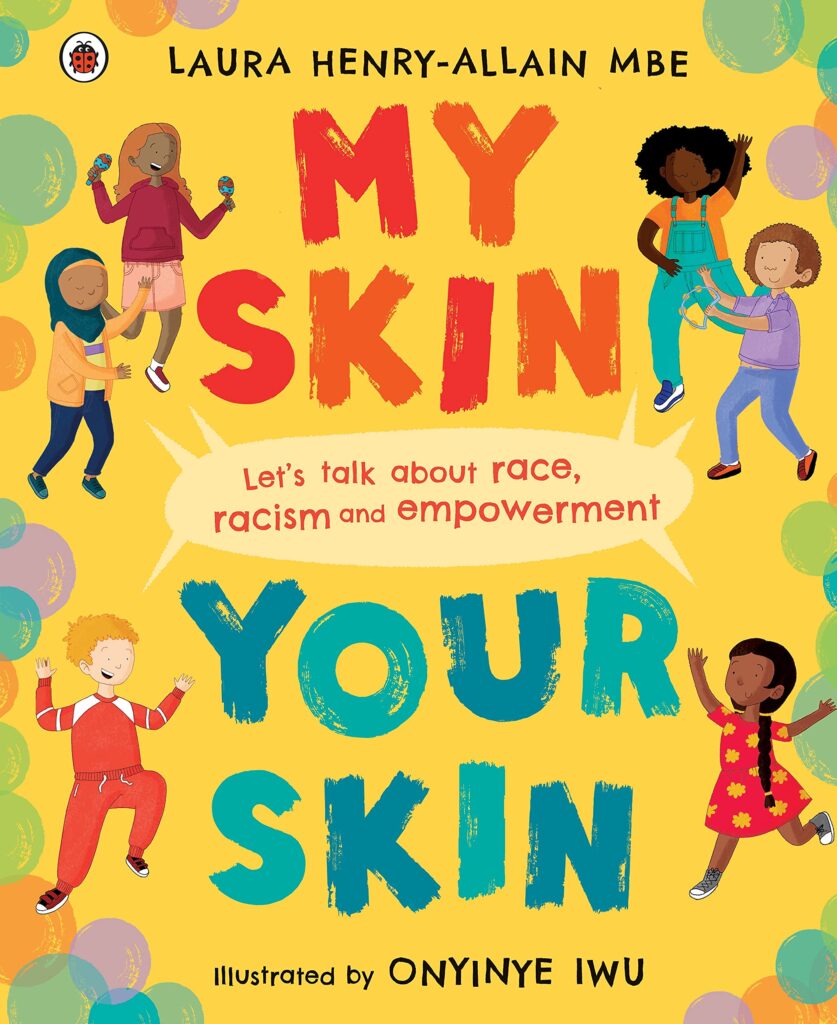
“My Skin Your Skin is a powerful book to help children and adults have meaningful discussions about race and anti-racism. . Most importantly, the book empowers children to be the best versions of themselves; to have self-love, self-esteem and self-worth, irrespective of their skin colour.”
If we wish to make our EY world and the world we live in more authentic, fairer and a more equal space we have to stop assumptions and agree we are not all the same, we are all beautifully different. Just like the children and families in our early years spaces, our EY educators are unique and diverse and there is so much joy to embrace and discover when we give each other permission to authentically celebrate all of who we are. We are all deserving of respect, dignity and compassion.
Sources – click to view
Zaria Gorvett
https://www.bbc.com/future/article/20200604-what-we-can-learn-from-untranslatable-illnesses
by Edward T. Hall
Edward T. Hall’s Cultural Iceberg Model
Laura Henry Allain MBE,
Supporting the wellbeing and mental health of People of Colour and Black people in the workplace
Helpful resources for Black people and People of Colour

Inclusive Language
What are personal pronouns and do they matter?